Overview
Financial literacy is often overlooked in early education, leaving many young people unprepared to make informed money decisions. Flip & Floss set out to change that with Flip Academy, a gamified learning platform designed to introduce students to concepts like saving, investing, and spending in a way that feels fun, motivating, and accessible. Founded by Andre Smith, Flip & Floss turns financial education into an interactive, game-like experience that empowers students to learn. Flip Academy introduces financial concepts through interactive courses, challenges, and rewards. By combining education with gamification, the platform aims to make money management fun, motivating, and accessible for students from a young age. To boost engagement, Flip Academy integrates gamified features such as:
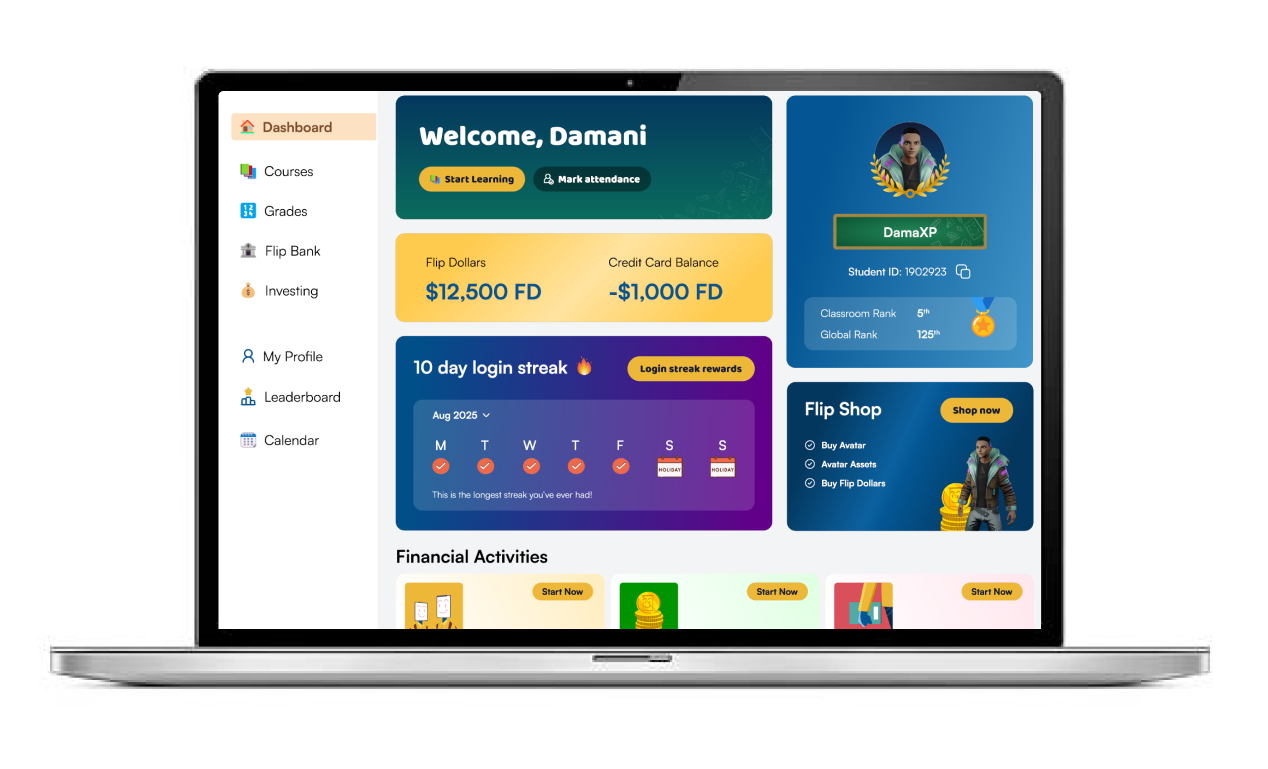
Unlockable rewards and profile customization
Classroom and global leaderboards
Play-based learning activities
The Problem
Financial literacy is crucial, but traditional teaching often feels abstract and disengaging. Flip Academy needed a way to make money management approachable and exciting for students through a more interactive, play-driven experience.
The Solution
We redesigned financial education as play—using gamified lessons, challenges, and rewards to make learning intuitive and fun. This approach keeps students engaged, improves retention, and builds real-world financial confidence through hands-on exploration.
Research Synthesis
User Interviews
Before our project, a previous research team partnered with Flip & Floss to explore why students weren’t engaging with Flip Academy. Because participants were minors, interviews were conducted with parental consent and focused on understanding how kids perceive financial learning and what keeps them motivated.
The study tested three key assumptions:
Finance feels boring – Students view money management as dull or difficult, making it hard to sustain interest.
Low social sharing – Without playful competition or social features, students rarely talk about or revisit the app.
Uninspiring interface – A plain design and static activities fail to capture the energy or creativity that engages young learners.
After interviewing the participants, the results were organized to four key themes and insights…
1: Motivation through rewards & competition
Kids are most engaged by short, rewarding experiences with instant gratification, leaderboards, and opportunities to share achievements. Social competition and real or perceived value (like in-game currency or rare items) drive sustained use.
2: Simplicity & Usability matters
Overly complex interfaces discourage engagement. Clear, simple, and visually engaging designs make apps and games more approachable and enjoyable.
3: Social connection is key
Peer interaction, sharing milestones, and meaningful notifications (from friends, family, or time-sensitive events) foster engagement, while generic alerts are ignored.
4: Linking financial literacy to real life
Kids understand basic saving/spending but struggle with long-term planning and abstract concepts. They respond best to relatable, real-world applications—like chores, odd jobs, and tangible rewards that give in-app currency real impact.
Persona
Team & roles
Jesh Anies - Lead UX/UI Designer
Deepthi Vasudevan - UX/UI Designer
Kulsum Zaidi - UX/UI Designer
Project Timeline
Tools
July 2025 - September 2025
Responsibilities
Figma, Calendly, Zoom
Research Synthesis, Wireframing, Prototyping, Collaboration with client and team
Flip Academy
Gamified financial education to empower the next generation.
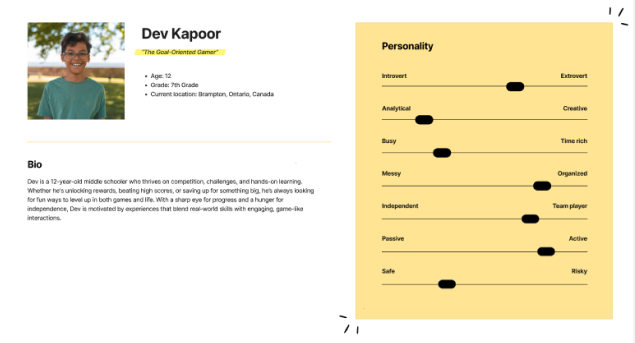
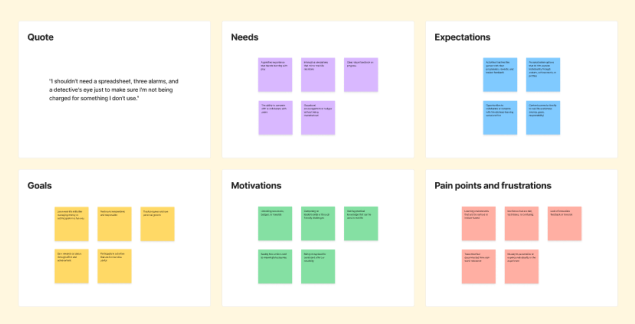
To guide the design process, we created a persona that captured motivations, frustrations, and learning preferences. This persona ensured that the platform’s features—such as gamified challenges, login streaks, leaderboards, and rewards were tailored to their needs, and made financial learning fun and meaningful.
How Might We
Wireframes
Using the information gathered from Flip & Floss, my team and I brainstormed a list of guiding questions which set the foundation for providing a solution to the problem:
How might we design rewarding, challenge-based experiences that make learning feel like play?How might we build friendly competition and social interaction to boost motivation?How might we transform mini video courses into playful, interactive journeys that build financial skills?
Ideas & Inspiration
Our inspiration came from familiar, highly engaging platforms:
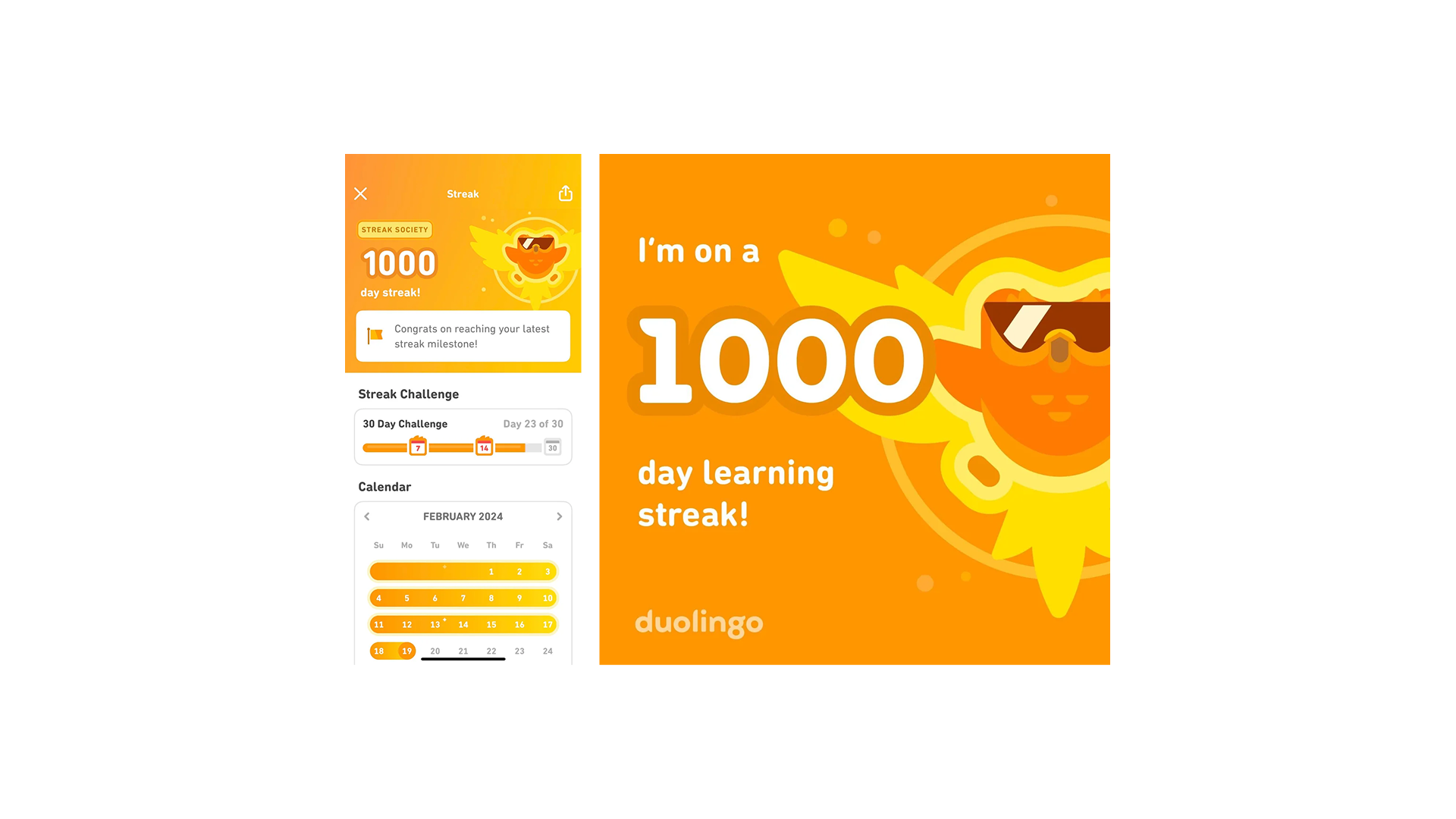
Duolingo – Motivates consistency with streaks and playful animations.
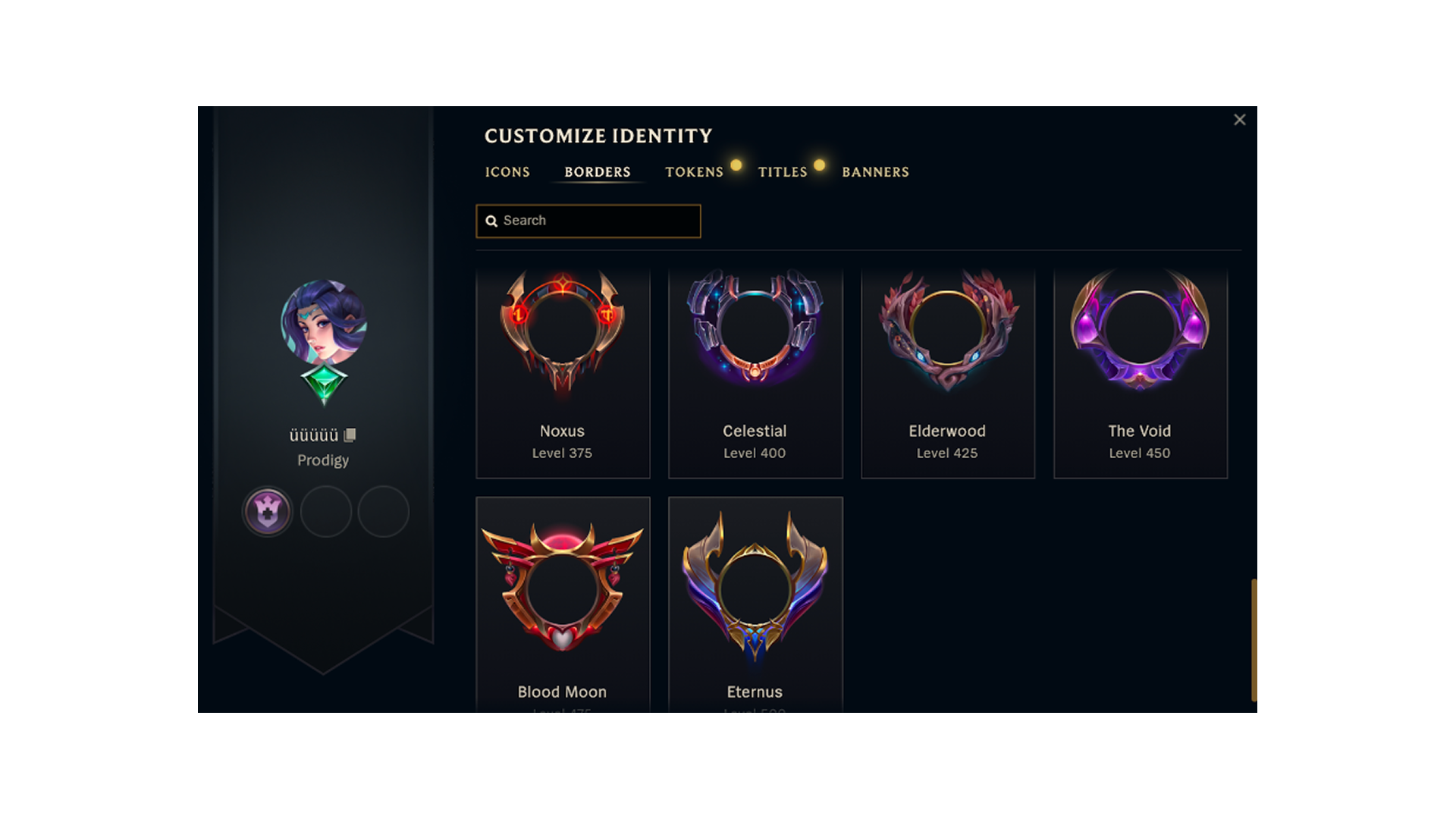
League of Legends – Rewards progress with profile borders and seasonal updates that keep experiences fresh.
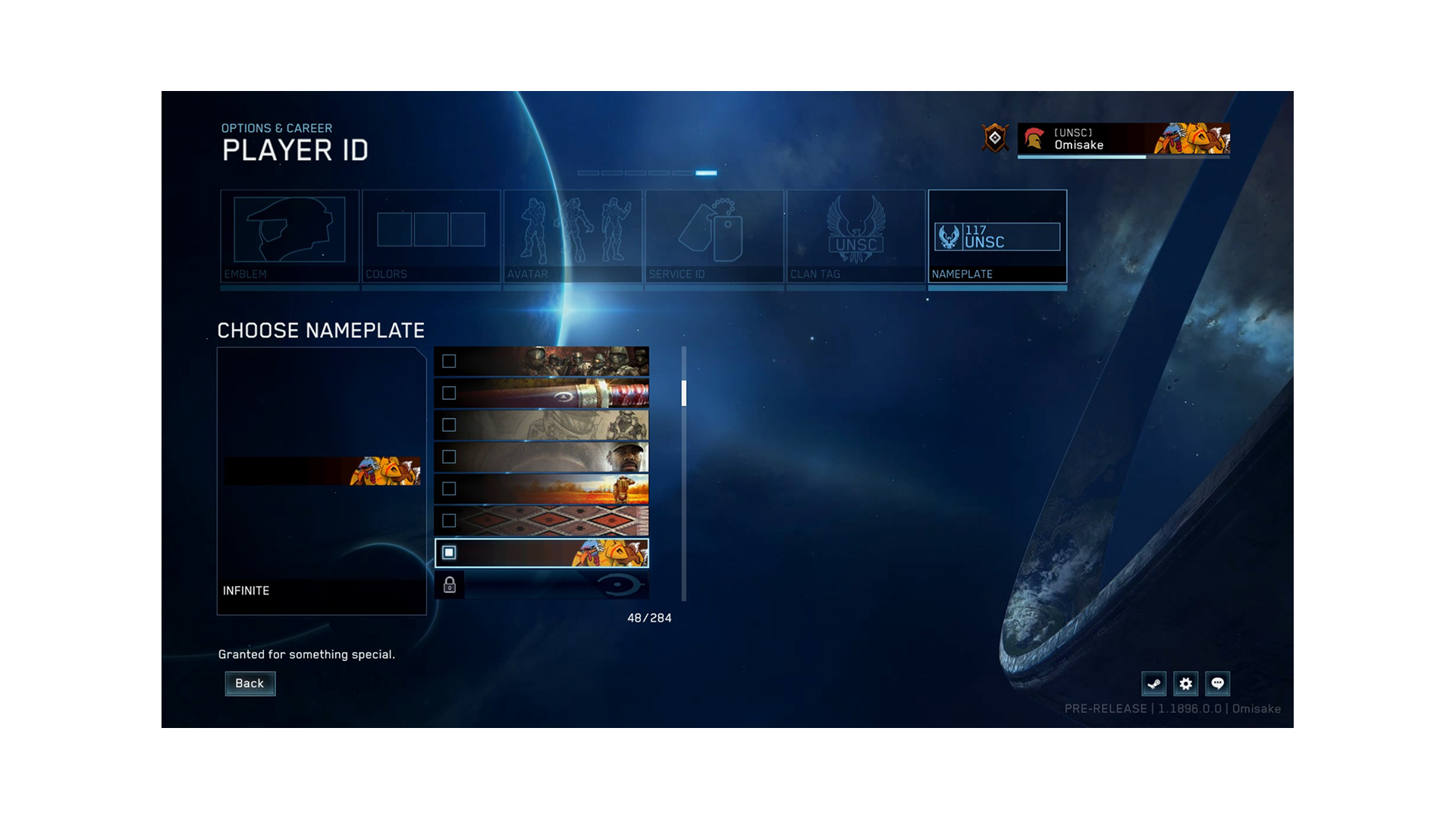
Halo – Personalizes achievement through nameplates and badges.
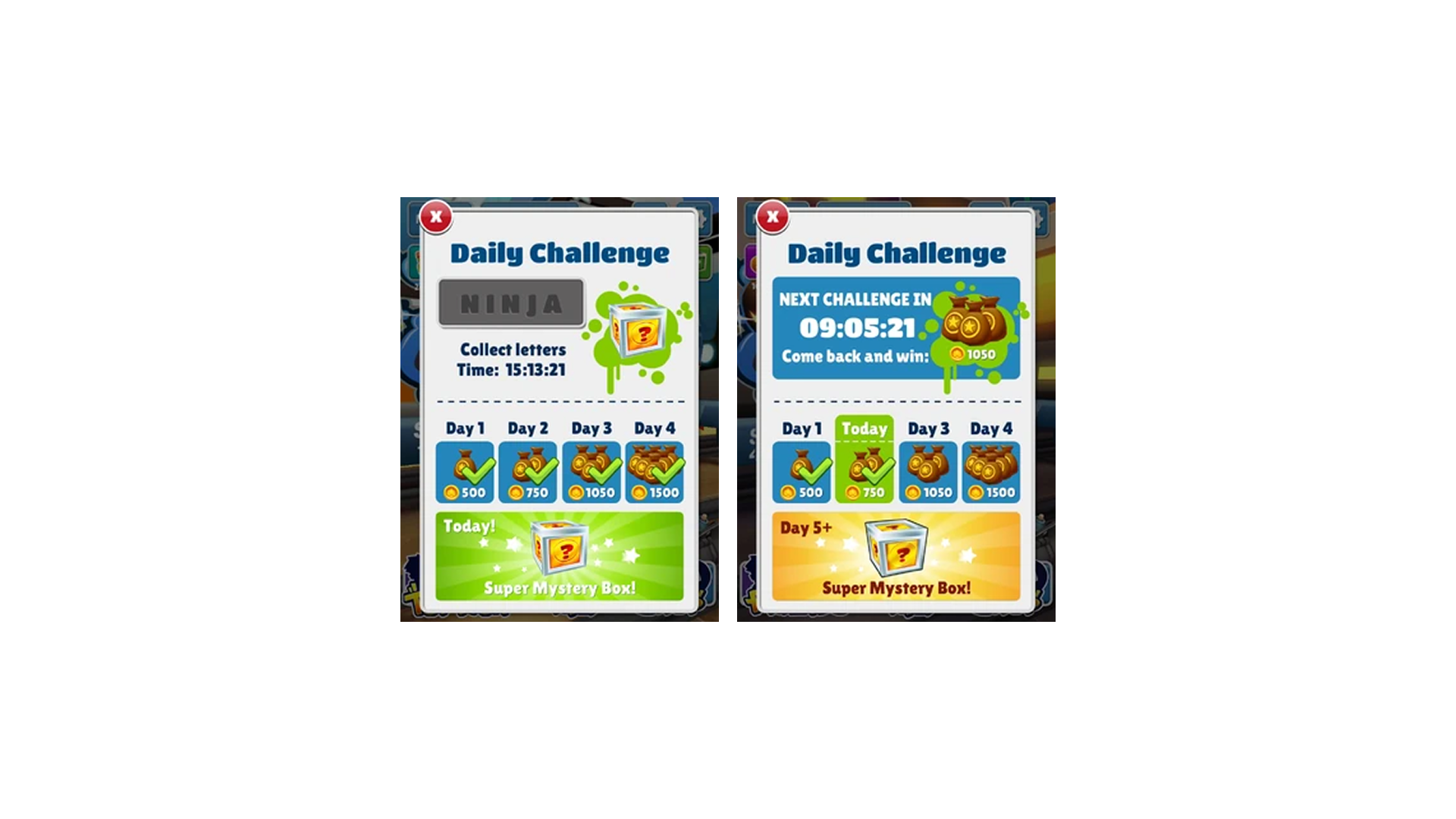
Subway Surfers – Encourages repeat play through daily and weekly challenges tied to rewards.
These examples showed how incentives and social features can transform financial education into a playful, habit-forming experience that keeps students coming back.
Duolingo
Halo
League of Legends
User Stories
Building on our initial concepts, we created 12 user stories to explore how students could engage with Flip Academy. We then prioritized and refined them into 7 core stories that shaped the Minimum Viable Product—focusing on experiences that enhance engagement and make learning fun and rewarding.
The two stories designed by me were:
-
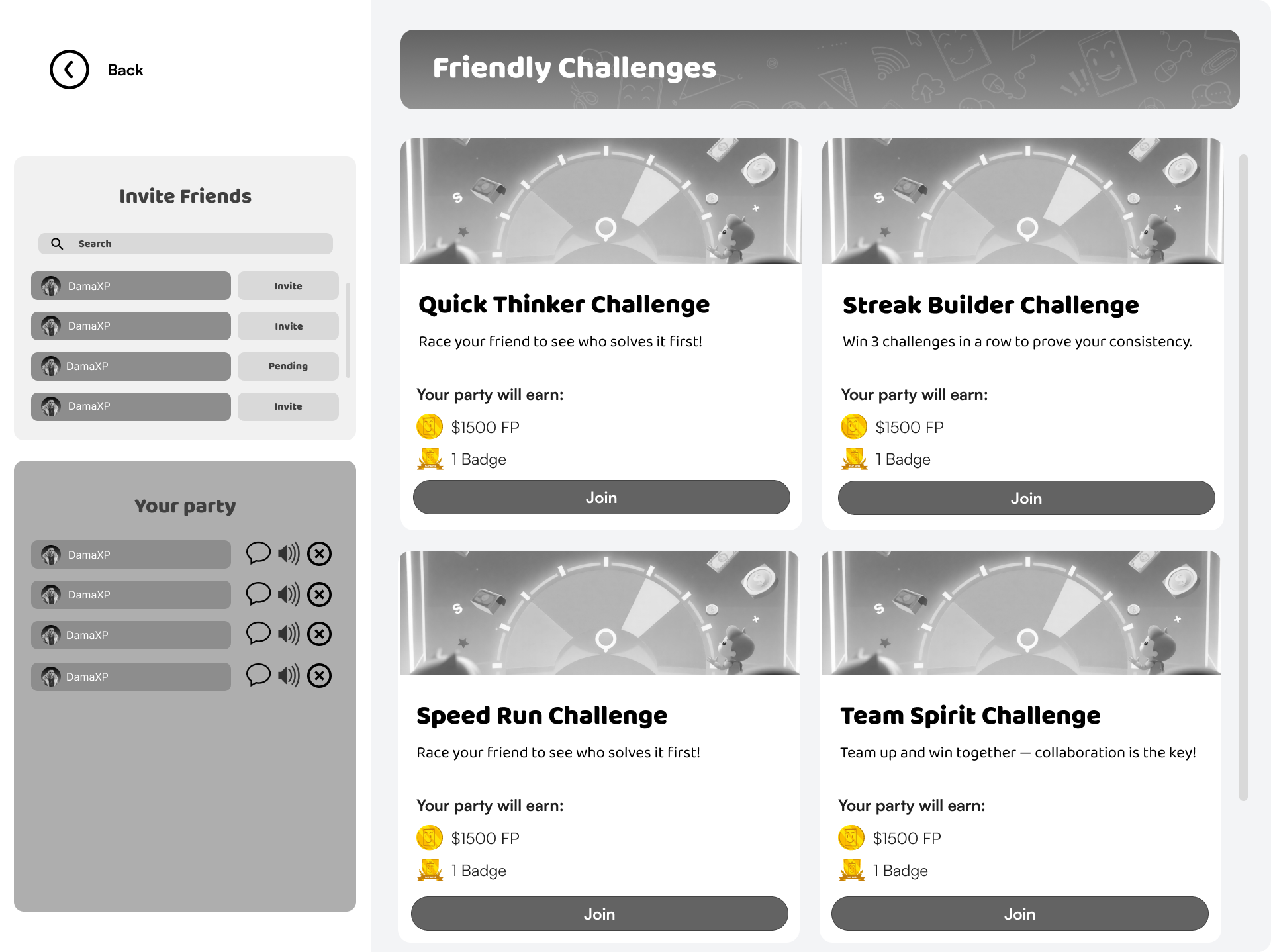
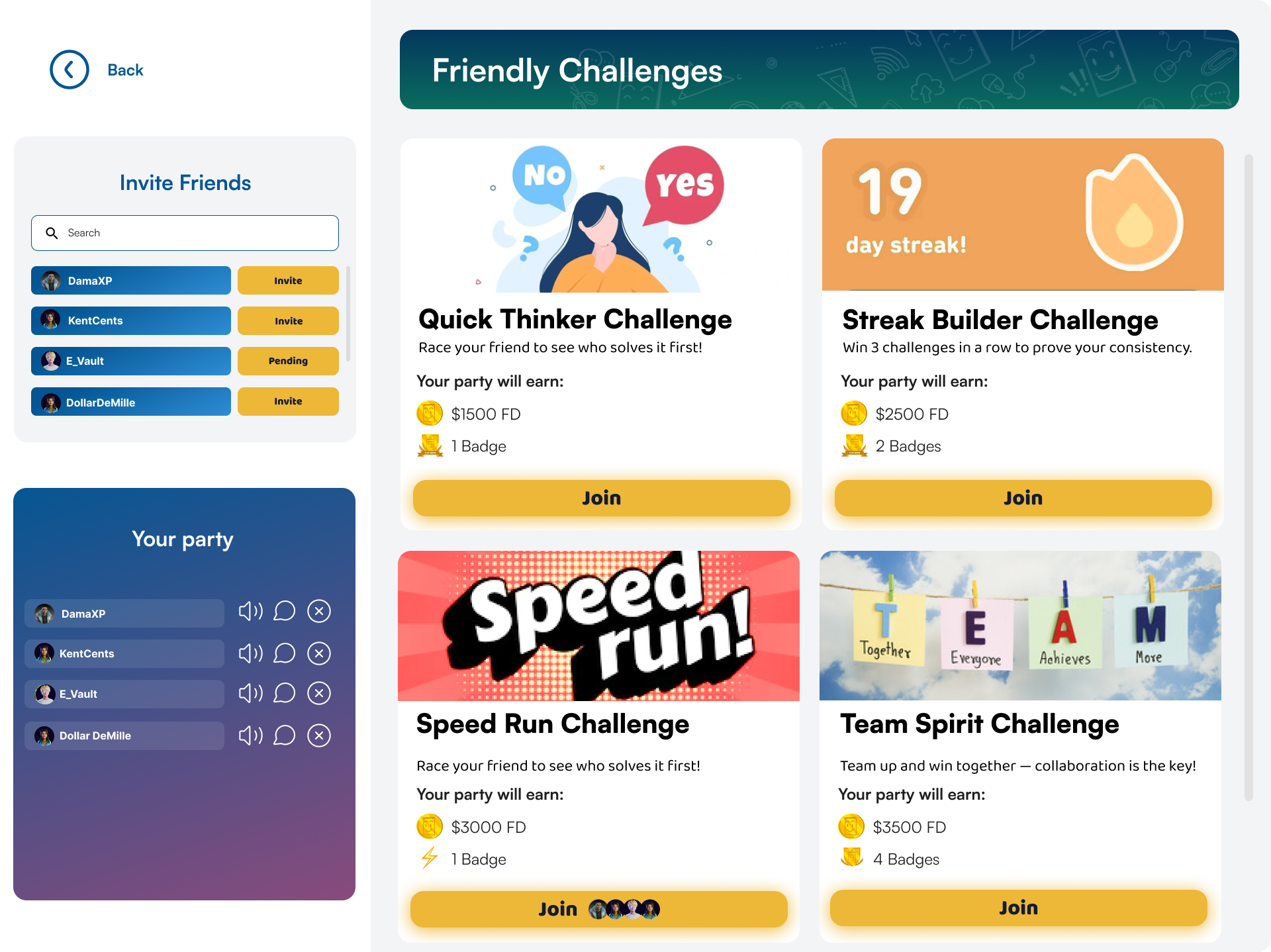
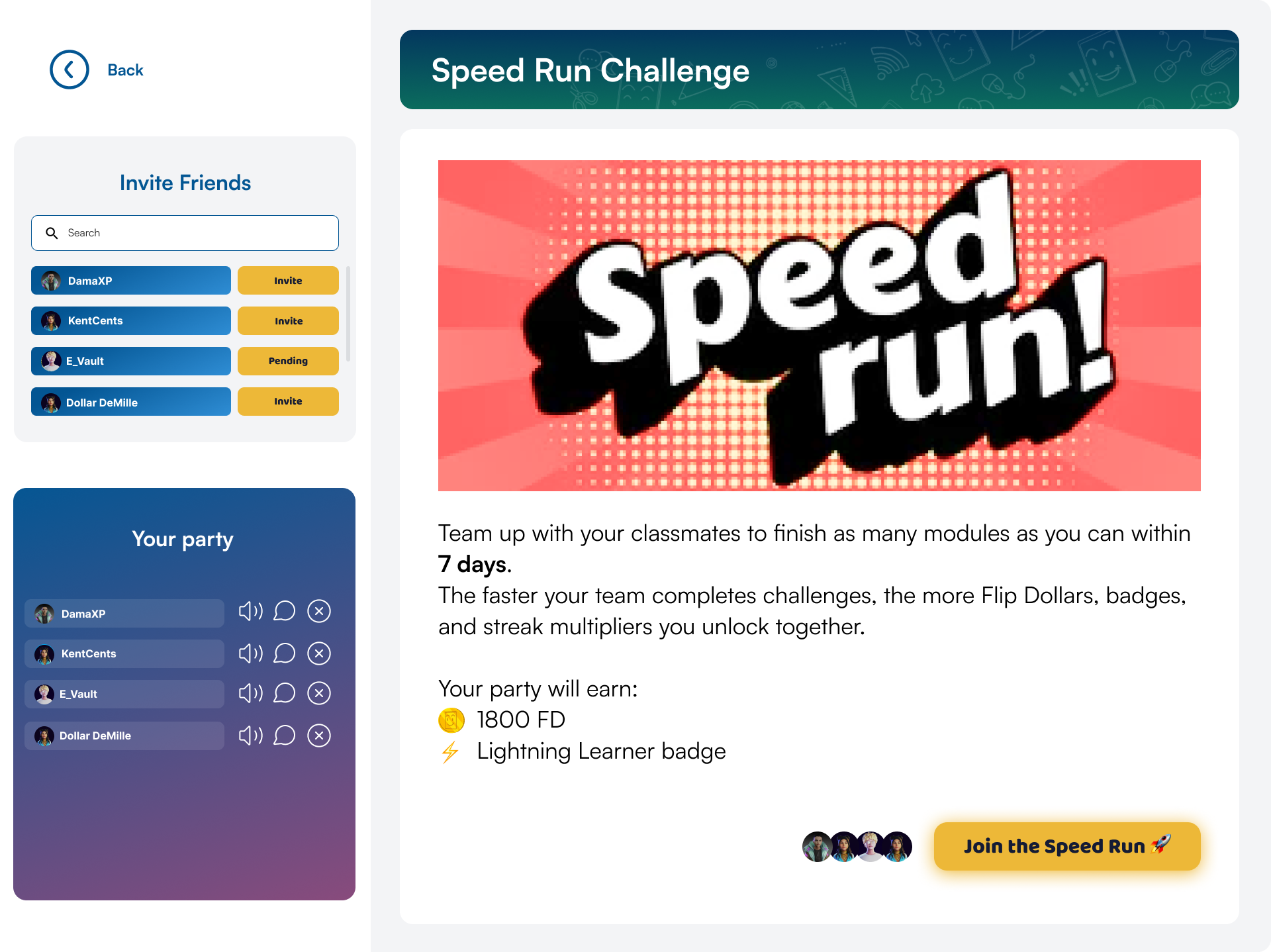
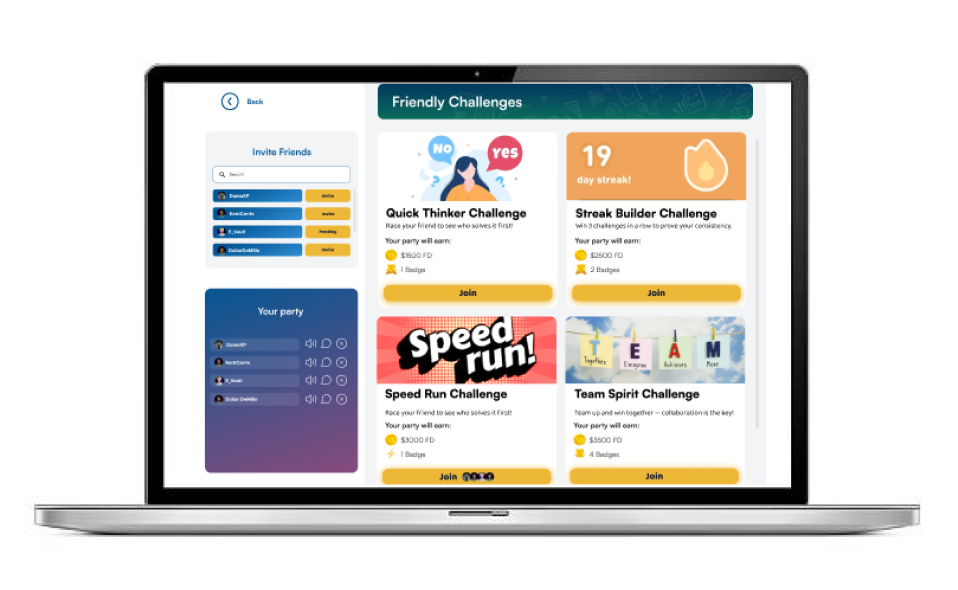
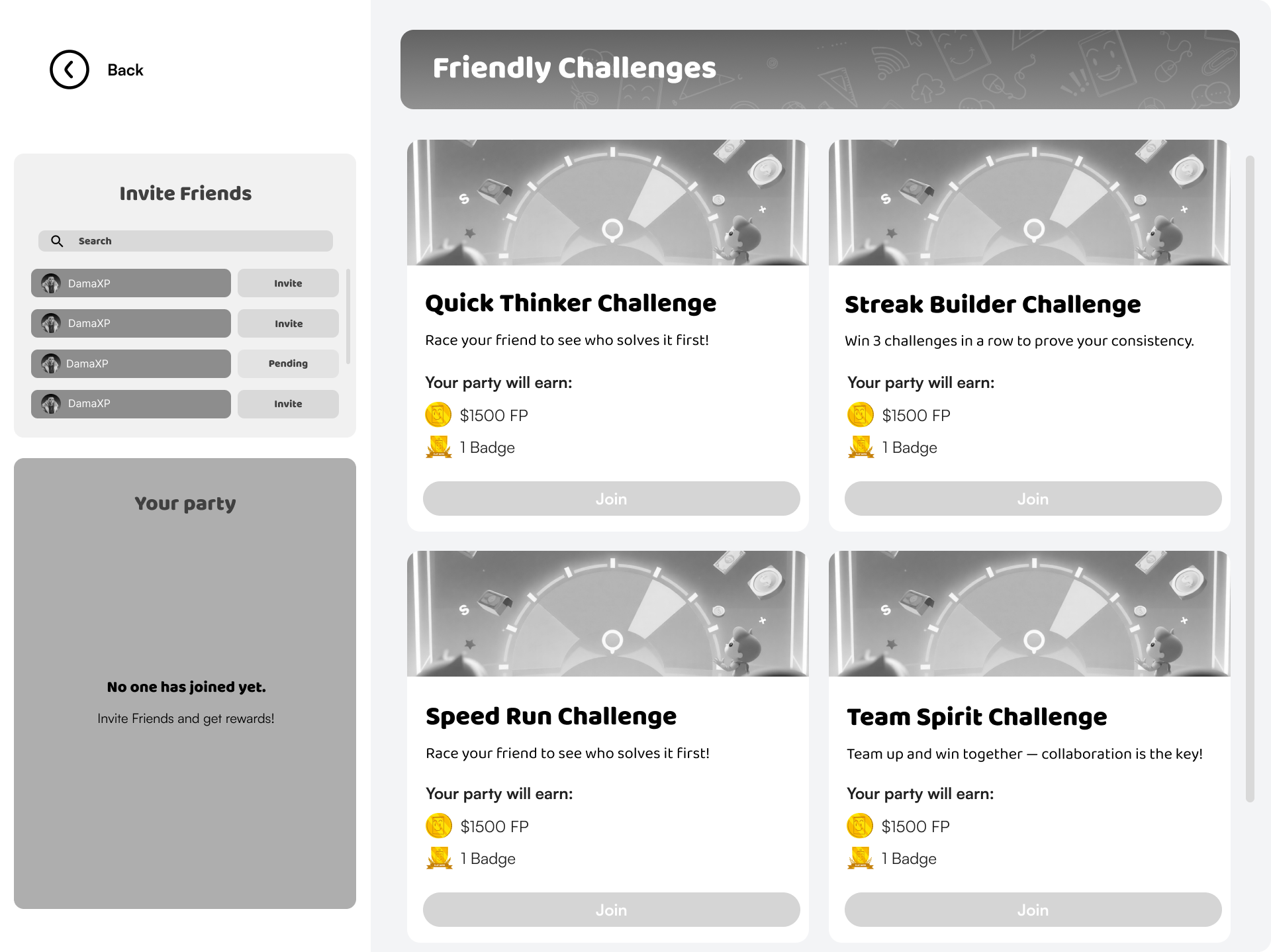
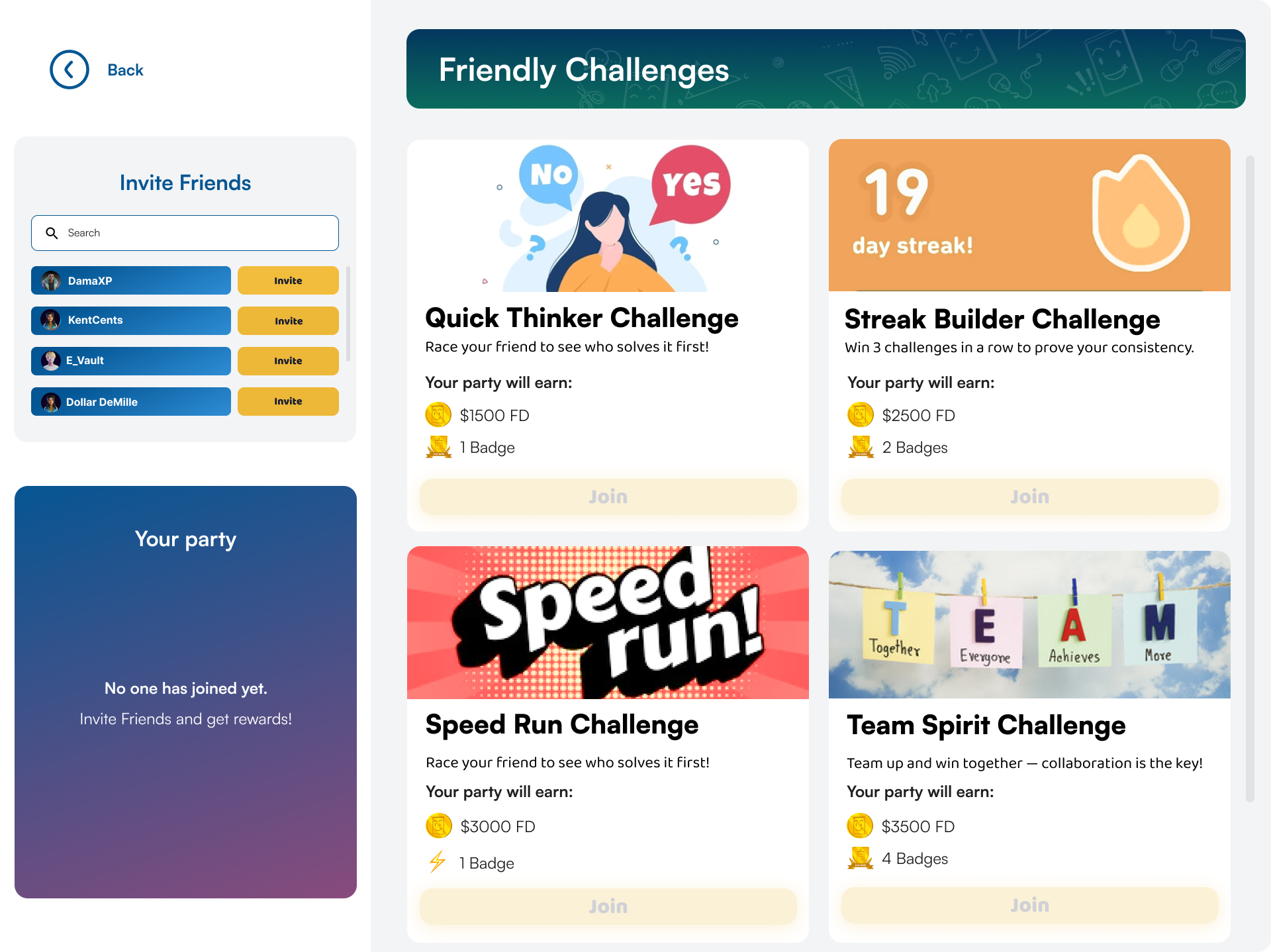
As a student I want to send a challenge to a friend so that I can invite a friend to complete the course and see how much faster they can finish compared to me.
-
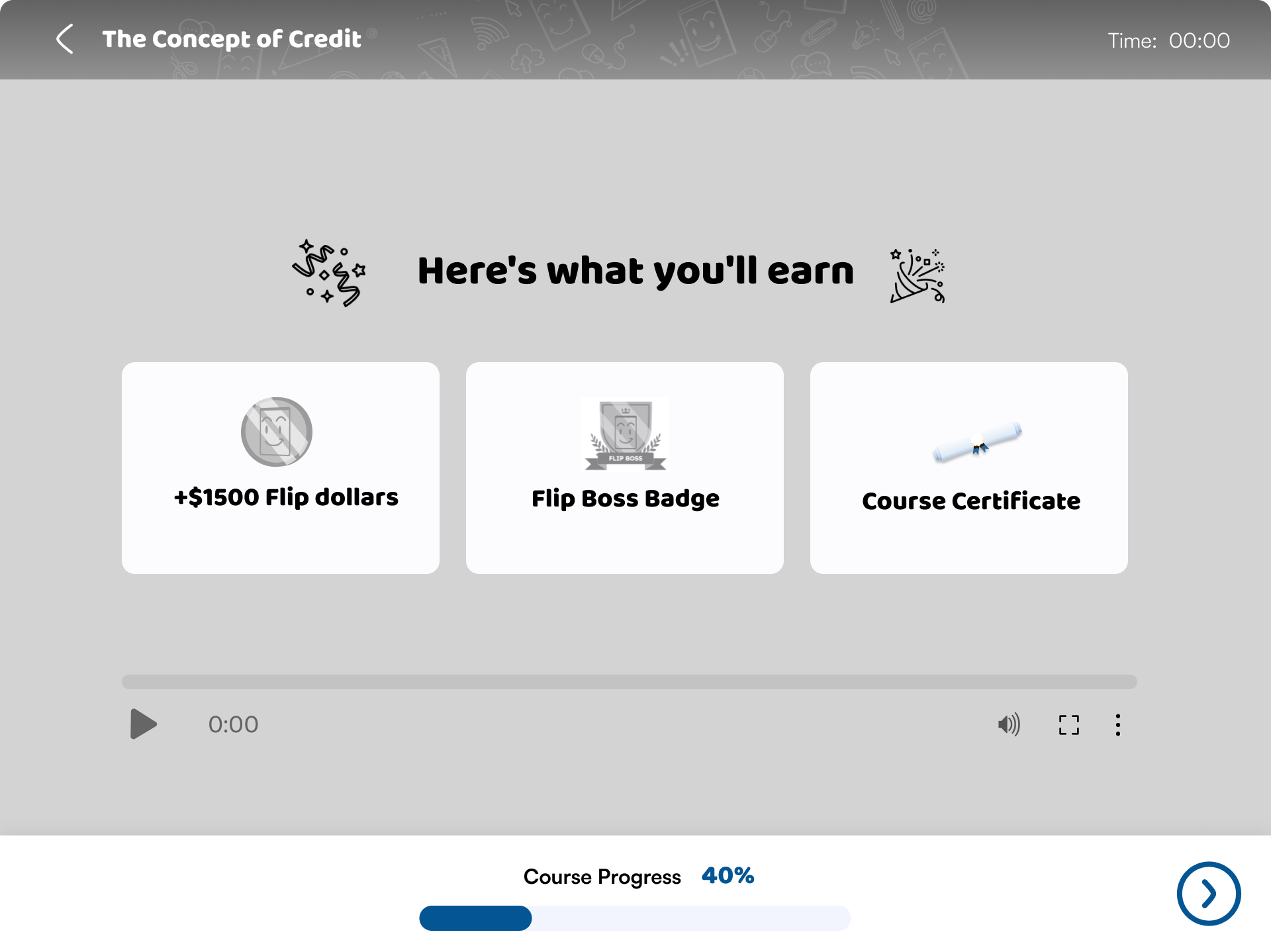
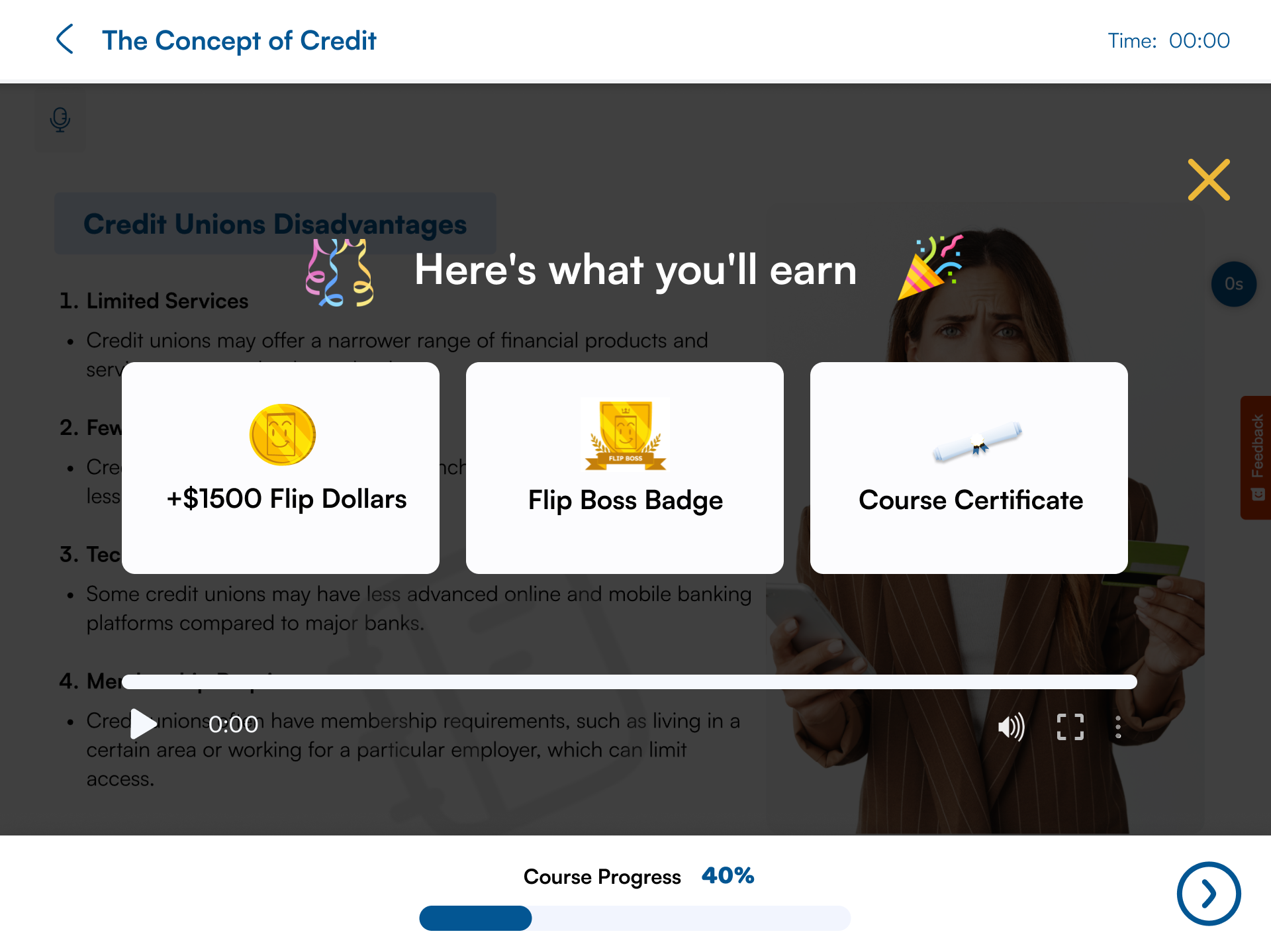
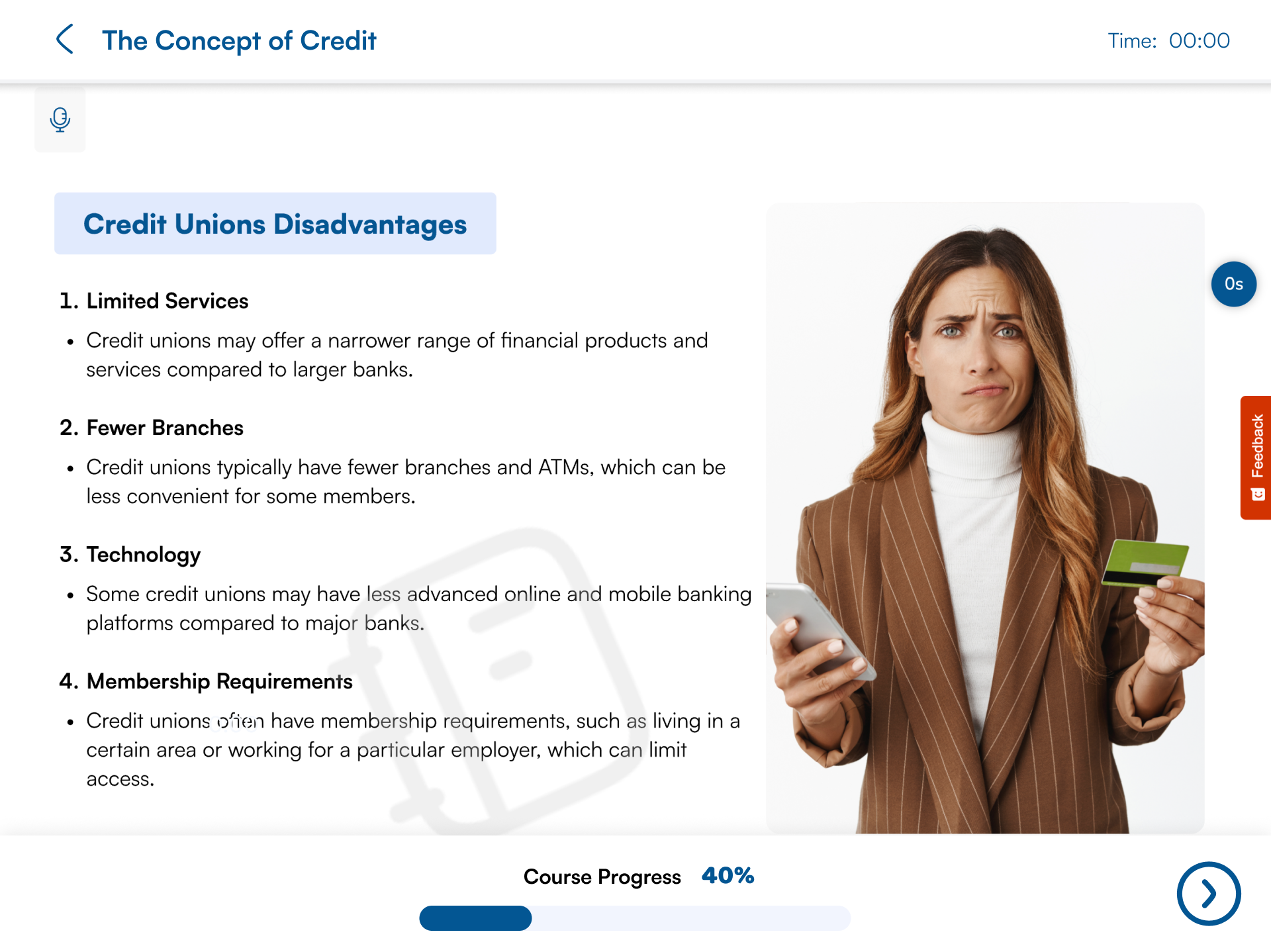
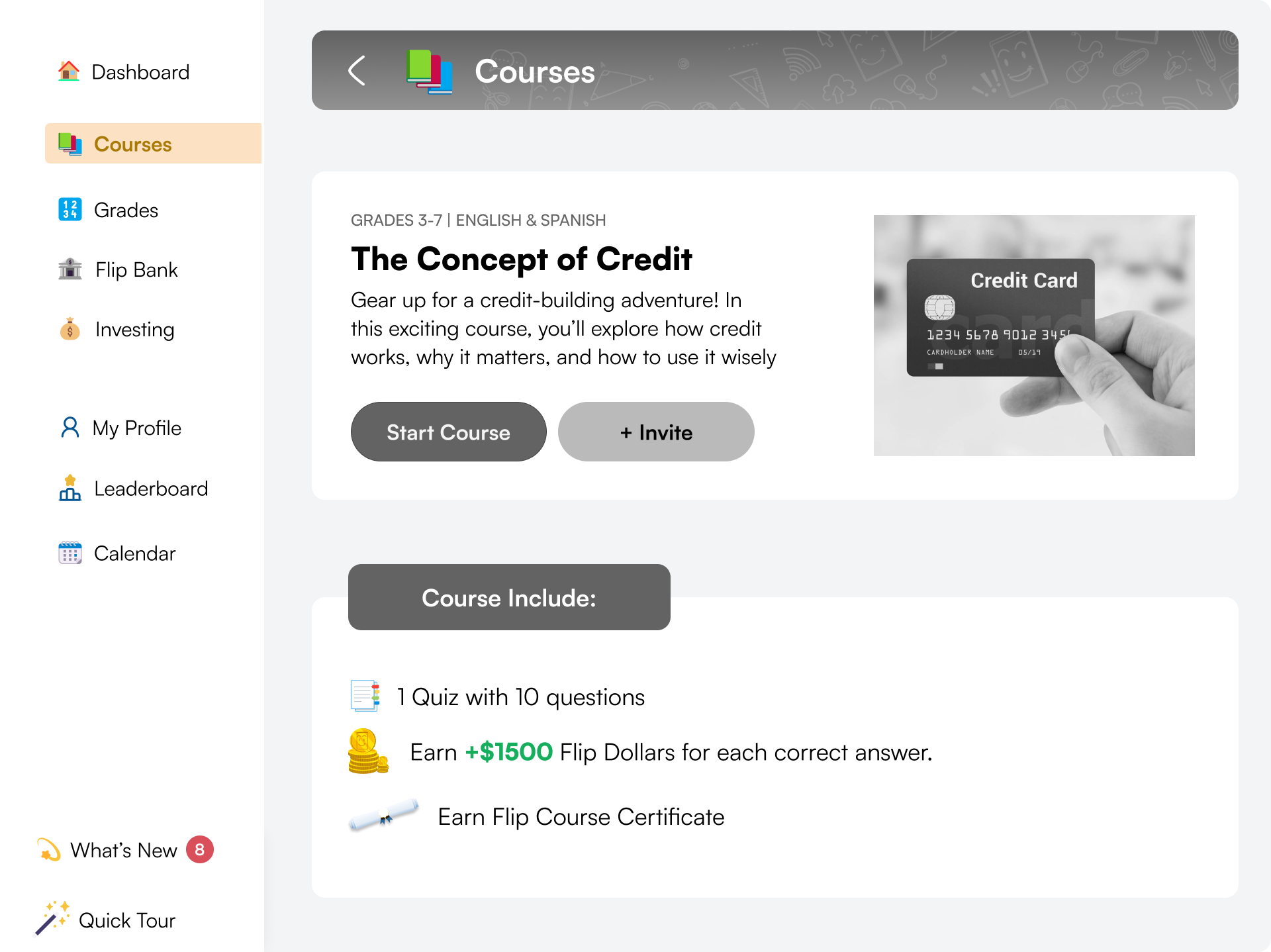
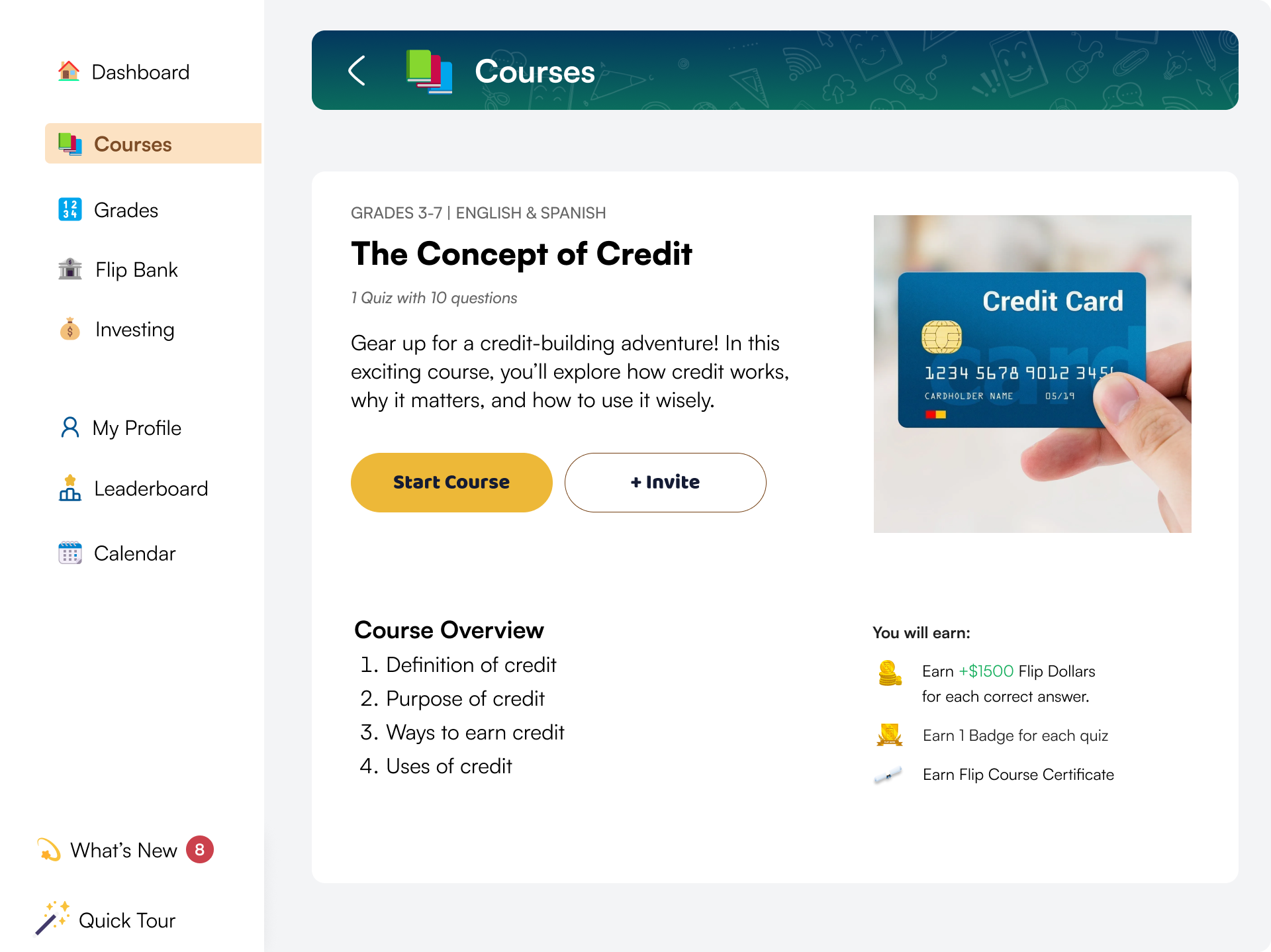
As a student I want to review the rewards upfront in a course video before the rest of the video plays, so that I am reminded of what rewards I’ll unlock after finishing the course.
User Flows
Subway surfers
I then designed user flows to help visualize the various scenarios a user undergoes by sending a challenge to a friend and by reviewing the rewards before the video starts.


The Design System
The Flip Academy design system embodies a sense of play and energy, establishing a vibrant visual language that connects with students and sparks curiosity. Drawing inspiration from mobile and console gaming, it’s built for flexibility and innovation while seamlessly integrating gamified elements such as avatars, leaderboards, profile cosmetics, and the Flip Shop—where students can use in-game currency earned through course completion to unlock rewards.
The typography combines Baloo and Satoshi to create a friendly and approachable tone. Every detail—from color palette and type choices to interactive components—works together to make financial learning enjoyable, engaging, and motivating, turning education into an experience that feels like play.
Sketches
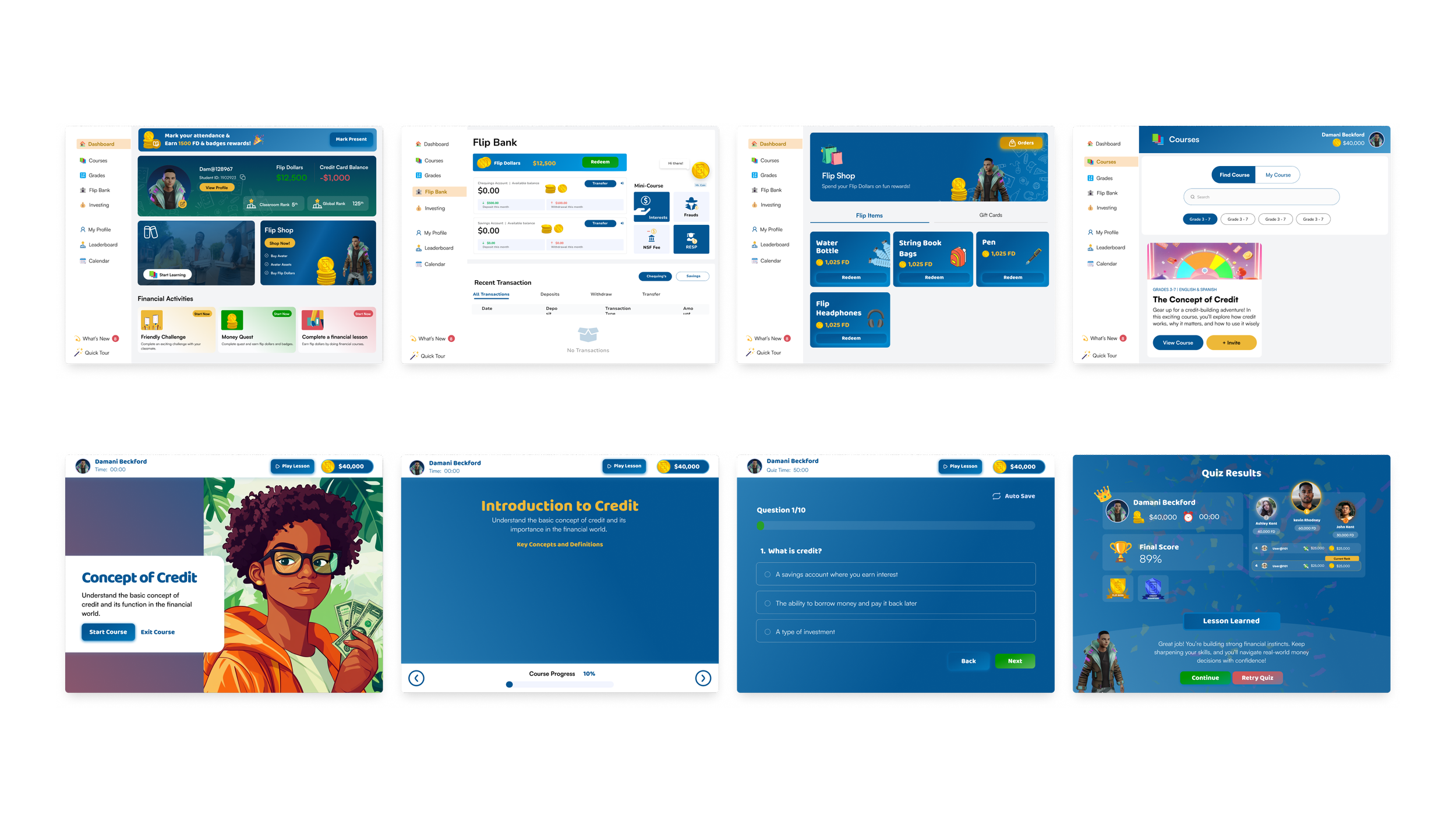
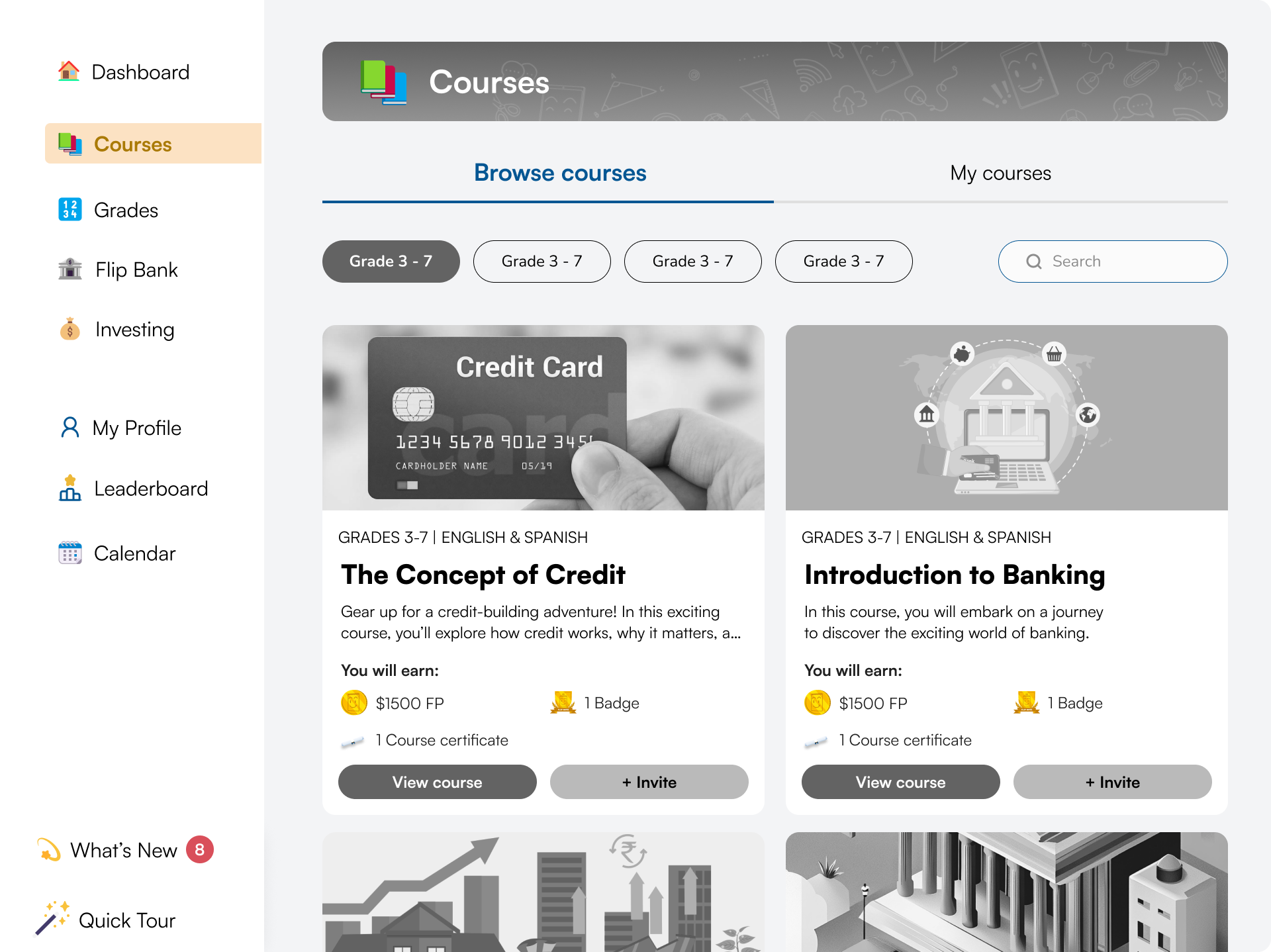
After outlining the user stories and flows, I created initial sketches for sending a challenge to a friend and reviewing rewards upfront. These sketches helped visualize the user interactions within the app and clearly communicate design ideas for team feedback.
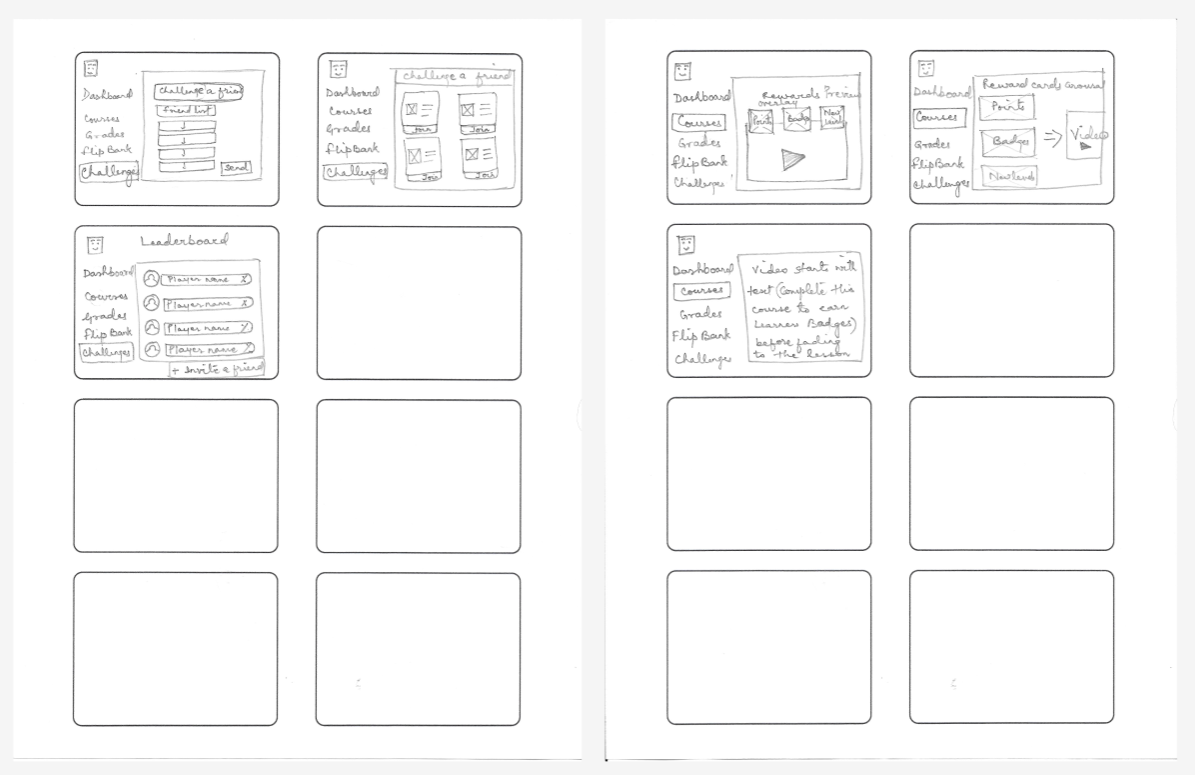
Following the sketches, we developed wireframes in Figma to refine the interface within a digital context. This stage added depth to the UX by incorporating live copy and illustrating how user interactions would impact the experience. It also allowed us to implement foundational design elements, such as a grid system, ensuring consistent spacing and alignment across components.
High-Fidelity Screens
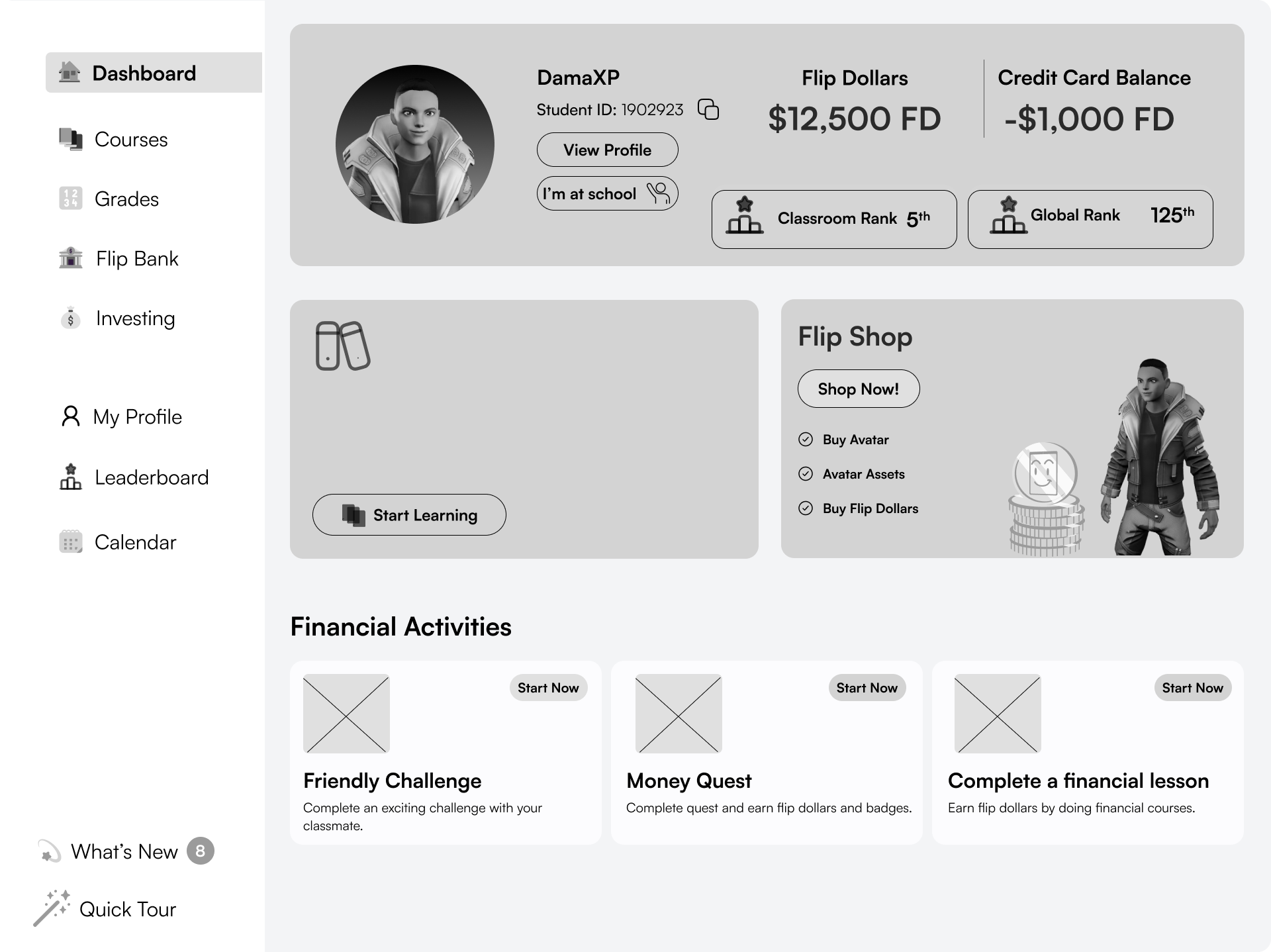
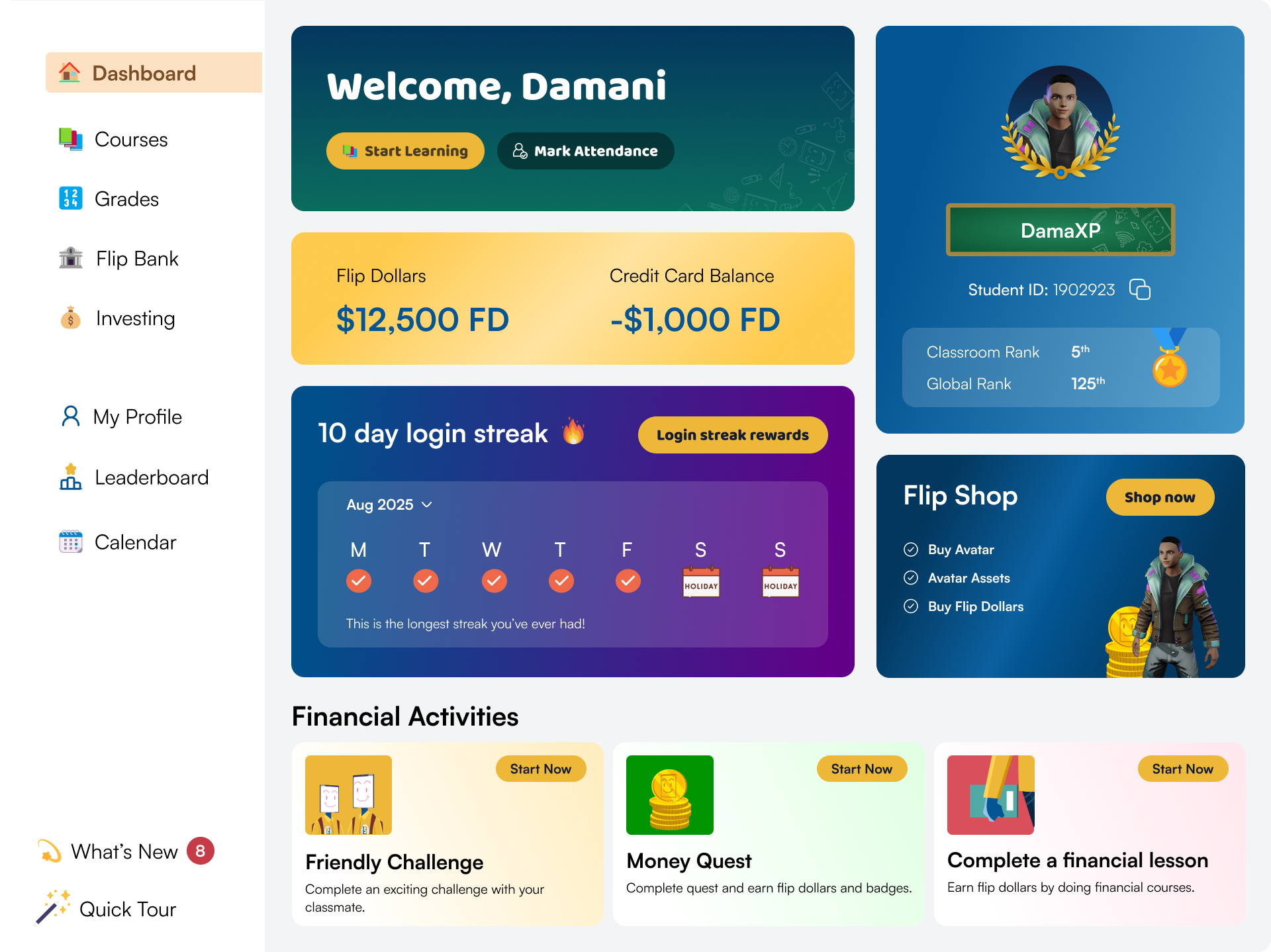
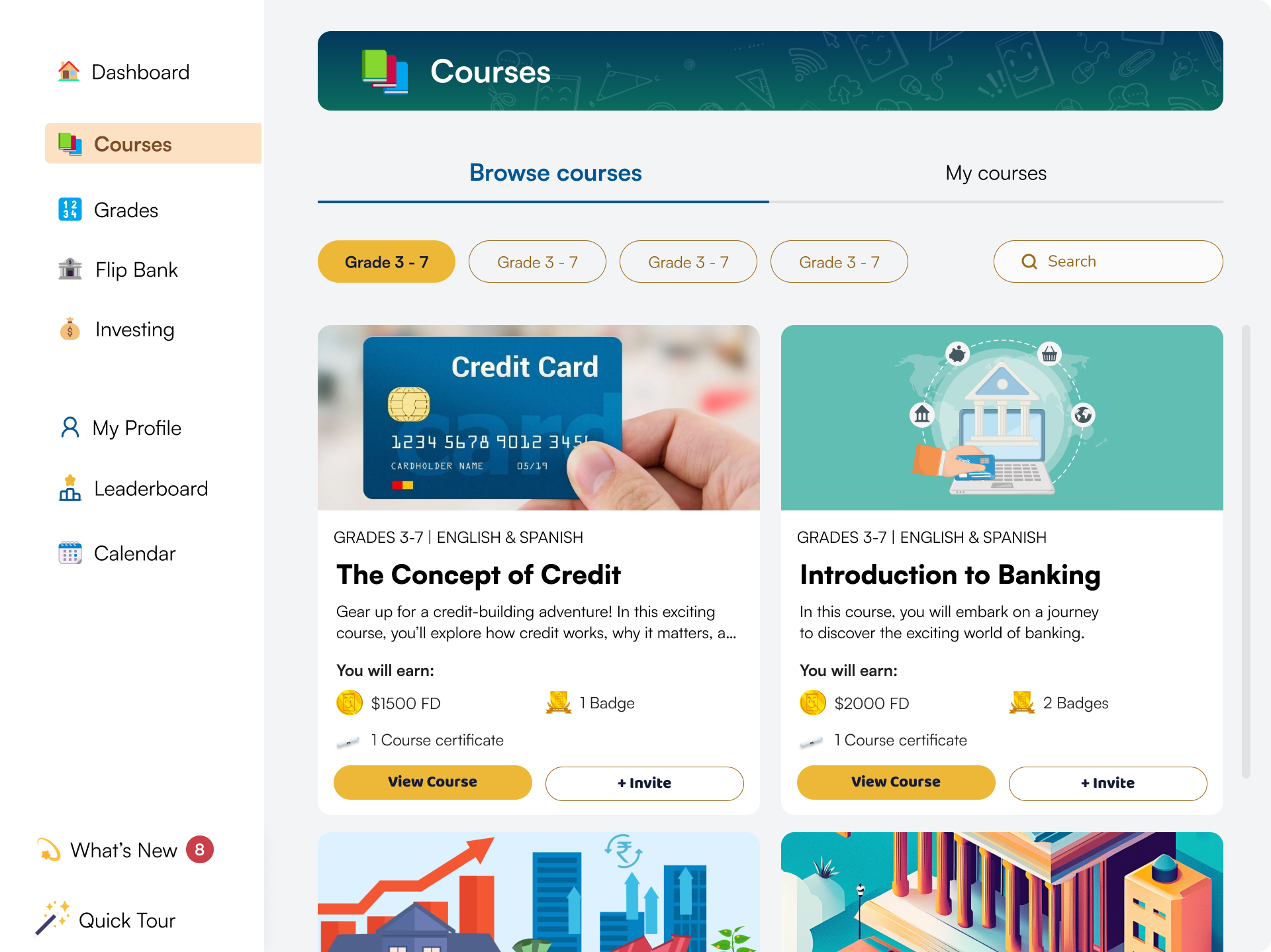
Building on our wireframes, the team created a high-fidelity, interactive prototype that reflected Flip Academy’s updated design direction. Keeping our persona, Dev, in mind, the prototype maintained a playful and vibrant tone while presenting information clearly and accessibly. I redesigned key screens and refined existing ones, including sending a challenge and review a reward screen to serve as the intuitive starting point for users testing the prototype. These improvements ensured that interactions were engaging and easy to understand, reinforcing the platform’s mission of making financial education enjoyable and rewarding.
Hi-Fi Prototype
Usability Testing & Iteration
After iterating on the prototype based on client feedback, usability testing was conducted by us to evaluate Flip Academy’s overall usability, identify issues, and assess the navigation of the key features. Flip & Floss recruited participants through their school partnerships, resulting in two students who had never used Flip Academy and provided parental/guardian consent. Observations and feedback were logged to guide interface refinements.
Reactions were mixed. The first participant, within the target age range, responded positively to features like login rewards, attendance rewards, and profile customization. The second participant, younger than the intended audience, struggled to navigate tasks and understand gamification elements such as rewards and leaderboards. Insights from both sessions highlighted areas for improvement, most of which were minor, with one critical adjustment required. Here is how the prototype was updated based on user feedback…
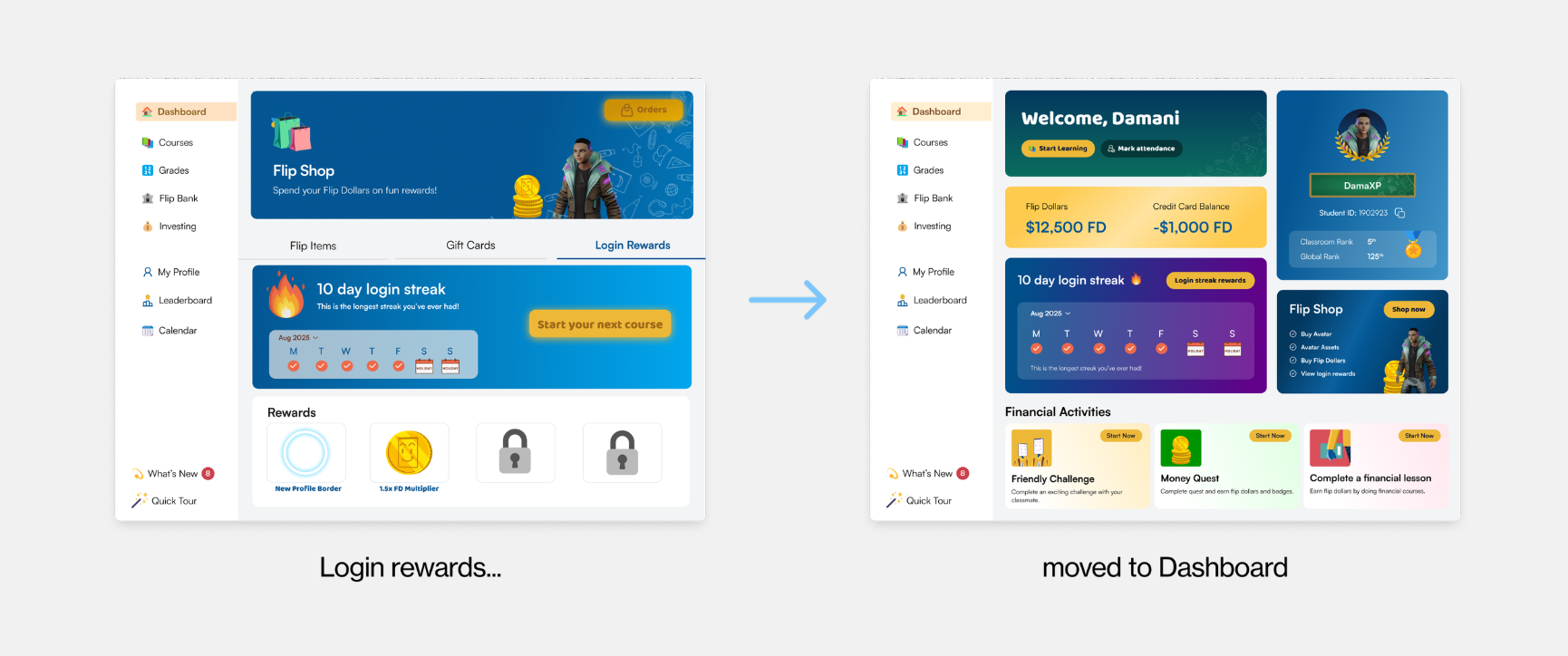
The main recommendation was to move login rewards to the dashboard, as participants did not realize rewards were nested under the Flip Shop. Once moved, the component was removed from the Flip Shop entirely. Originally, login rewards were tied to in-game currency and purchases, but testing revealed that students did not naturally make this connection. Adjusting the dashboard ensured rewards were visible and immediately understandable, improving engagement and clarity for the target user.
Client Handoff
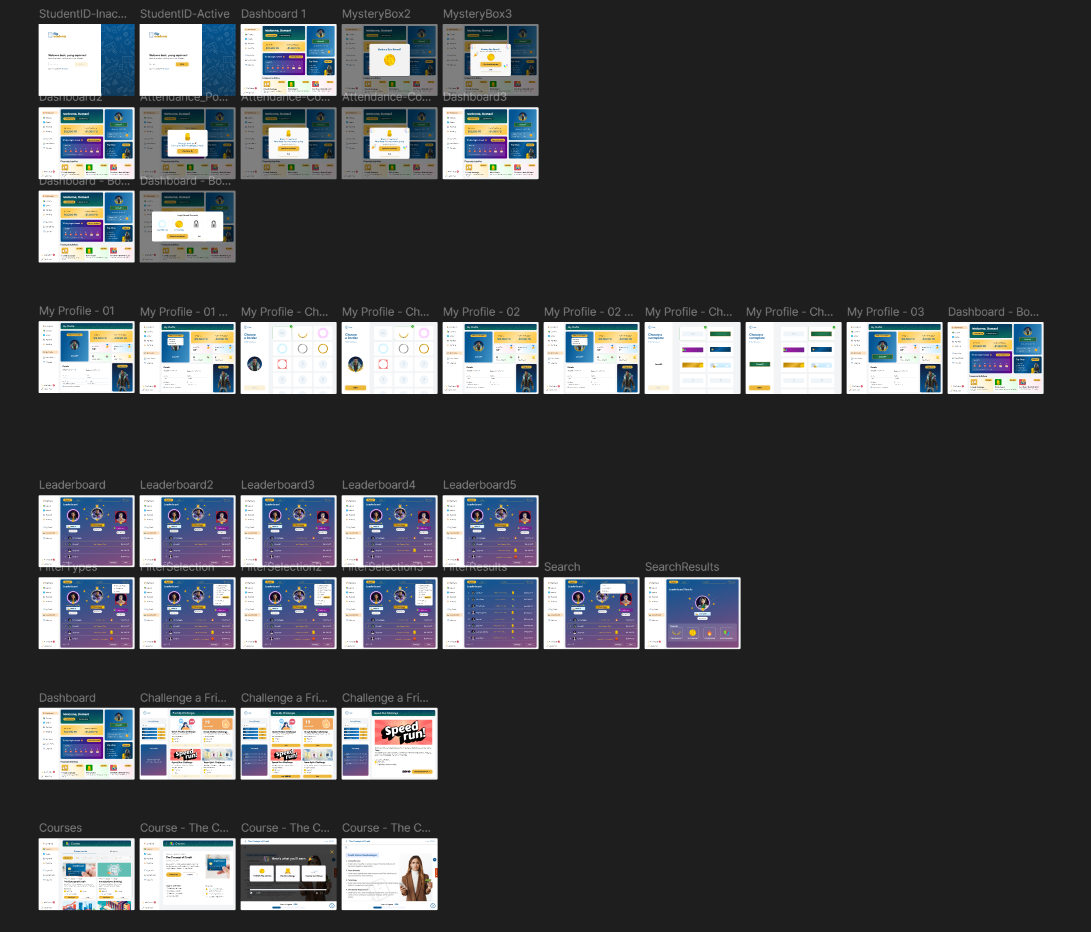
Conclusion
To conclude the project, our team presented user feedback findings and demonstrated the updated prototype. The Flip & Floss team responded enthusiastically, commending our efforts to enhance user engagement through gamification features. Our final steps included delivering the user testing report and granting the client edit access to our Figma prototypes, enabling their developer to review, save, and implement the designs in future iterations of Flip Academy.
Thank You!